SCIENCE AND RESEARCH
I am researching the transgenerational transmission of trauma. I edit psychoanalytic classics into Ukrainian

The clinical becomes scientific
My academic work has grown out of practice—and returns to it. I explore what I see every day in my office: how trauma is passed down through generations, and how it affects the psyche, resilience, and the capacity for recovery. I work at the intersection of clinical psychology, psychoanalysis, and research methodology. At the same time, I edit classic works of psychoanalysis into Ukrainian to ensure they are academically accurate and contemporary.
Scientific research
1
Thesis Topic
I am researching transgenerational trauma as a factor in the psychological resilience of civilians and military personnel. I am examining how the experiences of previous generations influence the resilience, vulnerability, and ability to recover of Ukrainians in wartime conditions.
2
Adaptation of the HITT-Q
Adapted and validated the HITT-Q questionnaire—an international tool for measuring the transgenerational transmission of trauma—for Ukraine. The primary sample consisted of 299 individuals, and the retest sample of 142.
3
The research is ongoing
At this stage, the study is designed for Ukrainians. If you have relatives, friends, or other close contacts from Ukraine who are more comfortable using English, please feel free to share these links with them.
4
Scientific publications
In 2025, three peer-reviewed articles were published on the Ukrainian adaptation of the HITT-Q: on the adaptation of the instrument, its factor structure, and a cross-cultural comparison with a Hungarian sample.
5
The “Landscape-Boat-Human” Model
I have developed the “Landscape–Boat–Person” clinical model—a systematic framework for interpreting HITT-Q results. An article on the model has been submitted to the international journal Traumatology (АРА).
6
International network
Researchers from seven countries have already formed a professional network and are collaborating with the authors of the methodology—Vera Békés and Claire Starrs.
Scientific editing
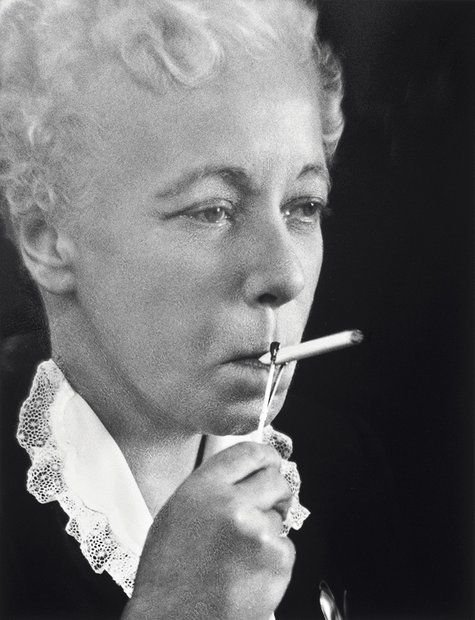
Karen Horney
Neurosis and Human Growth: The Struggle Toward Self-Realization
Verba Publishing House, Kharkiv, 2025–2026
in print
I served as the academic editor for one of the texts by a brilliant rebel in the field of psychoanalysis. I was responsible for ensuring terminological accuracy and adherence to the psychoanalytic tradition. My academic notes totaled over 75,000 characters, and the foreword totaled over 38,000 characters.
Click here to read an excerpt from the preface
From Hamburg to Kharkiv: Reading Hornai in 2025
This book came to me through an invitation. February 2025, the third anniversary of the full-scale invasion. The Kharkiv publishing house “Verba.” New. Founded during the war. In a city enduring the most brutal shelling, where children study in the subway, where civilians are dying. And yet they publish books there. Despite everything.
I was desperately short on time. Scholarly editing of a psychoanalytic text is not a quick job. It requires attention to every term, every concept; a responsibility to ensure that the Ukrainian reader receives a polished text, not just a translation.
I opened the book and reread it for the first time in many years. Gornay wrote about alienation from one’s true self; about the system of illusions a person builds to avoid feeling vulnerable; about the inner “musts” that dictate one must be strong; about pride, which both protects and destroys; about self-hatred when one fails to meet these demands.
She wrote as if about us, Ukrainians. About the exhaustion of the third year of war, when the adrenaline of the first months has run out, and the long haul remains. About defense mechanisms that have become a prison. About alienation from oneself, as if living on autopilot.
Right now, as a nation, we are experiencing a collective collision with reality, with our true selves—both individual and national. After 2022, the question “Who am I after all this?” becomes existential.
I realized that this book had to be published—and I agreed.