
Workshops that combine theory and clinical practice. Theory provides a deep understanding of phenomena, processes, and neurobiological foundations. Practice involves analyzing real-life cases.

I invite you to the “Challenging Cases” workshops
In 2023, I assembled an intervision group of psychologists from various disciplines and moderated its weekly sessions for three and a half years. During that time, there were 170 intervision sessions, with 3–4 cases discussed at each one.
The group operated amid the reality of full-scale war—rocket attacks, blackouts, losses, constant danger, and chronic stress. The clinical experience accumulated over these years formed the basis of “Challenging Cases”—a series of master classes for psychologists and psychotherapists who work during wartime and know how difficult it is to handle this work alone.
The war continues to present us with new experiences—ones that are invaluable for our professional understanding but come at a tremendous cost in human terms. I invite you to work with me on complex cases.
Every first Monday of the month, at 6:00 p.m. Kyiv time, on Zoom:
in 2026—September 7, October 5, November 2, December 7.
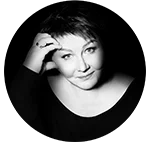
psychoanalyst, clinical psychologist
September 7, 2026, Monday, 6:00 p.m.–9:00 p.m., Zoom
“The Neurobiology of Therapy: Why a Method (Doesn’t) Work” (concluded)
coming: Monday, October 5, 2026, 6:00–9:00 pm, zoom
“Why Trauma Won’t Go Away: How It Changes Our View of the World”
November 2, 2026, Monday, 6:00 p.m.–9:00 p.m., Zoom
“What Helped Us Survive: Why Coping Mechanisms and Defenses Become Part of the Problem”
December 7, 2026, Monday, 6:00 p.m.–9:00 p.m., Zoom
“When a Child Appears in the Office: Working with Child Modes in Schema Therapy”
Participation fee: 3,000 UAH.
Registration (in Ukrainian)
How are the workshops conducted?
Host
I lead the master classes—I’m Tetyana Stanislavska, a clinical psychologist and psychoanalyst. For nearly three years, I led an intervision group, and “Complex Cases” grew out of that experience. For each session, I choose a topic, prepare the theoretical component, and moderate the clinical case discussion.
Theory and Practice
The workshop consists of 1 hour of theory (neurobiology, mental processes, clinical phenomena, concepts, and mechanisms) and 2 hours of case studies (one hour per case). The cases presented may not correspond to the lecture content on the same topic.
Presenting a Case Study
Cases for discussion are agreed upon in advance. A participant who wishes to present a case fills out a simple, structured form. This form will help organize the clinical material.
Insights from Experienced Colleagues
My experienced colleagues — Irina Khrysanfova and Olga Semenova — lead the case reviews. Others join in as they wish. Different professional perspectives help us see what’s hard to notice from within a single modality.
Analysis Results
We formulate several working hypotheses, identify what data is missing, and outline possible directions for further work. As a result, the participating therapist gains a clearer picture of the case.
Freedom of Participation
Each workshop is a separate, self-contained session. You can choose a single topic that interests you or attend the entire series. You don’t have to present your own case—you can simply listen, ask questions, and join the discussion.
Points to include in a structured form when submitting case for review
1. Information about the therapist: education, therapeutic modality, experience.
2. General information about the client.
3. The client’s request and the circumstances leading to the consultation.
4. Personal and clinical history.
5. Preliminary diagnosis and working hypotheses.
6. Duration, format, and course of therapy.
7. Significant excerpts from sessions.
8. Transference and countertransference.
9. Current difficulties or impasses in the work.
10. Therapist’s request for clinical supervision.
The case must be submitted 48 hours before the date of the workshop
Privacy Policy. All cases are anonymized. Identifying details are altered. Participants agree not to disclose what they hear. Only the theoretical portion is recorded. Clinical case discussions are not recorded.